
How will AI search impact contractors? What is changing and how to protect your leads
AI search is already shrinking the shortlist homeowners use to find contractors. The question is whether your business ends up on that shortlist or gets skipped.
Search engines are shifting from “here are ten websites” to “here is the answer” and sometimes “here are the best local options.” That is a big deal for service contractors because many customers start with questions like:
- How much will this cost?
- How long will the job take?
- Who is the most trusted contractor near me?
If those questions get answered right on the results page, fewer people click through to websites. That is a valid concern if your business relies on organic search for leads.
The good news is that people still need the work done. AI does not replace the need for a plumber, roofer, electrician, HVAC tech, cleaner, landscaper, or general contractor. It changes how quickly someone decides who to contact.
From an SEO point of view, the contractors who win will be easy to verify, clearly local, and consistently trusted online.
What are AI Overviews and why do they matter for contractor SEO?
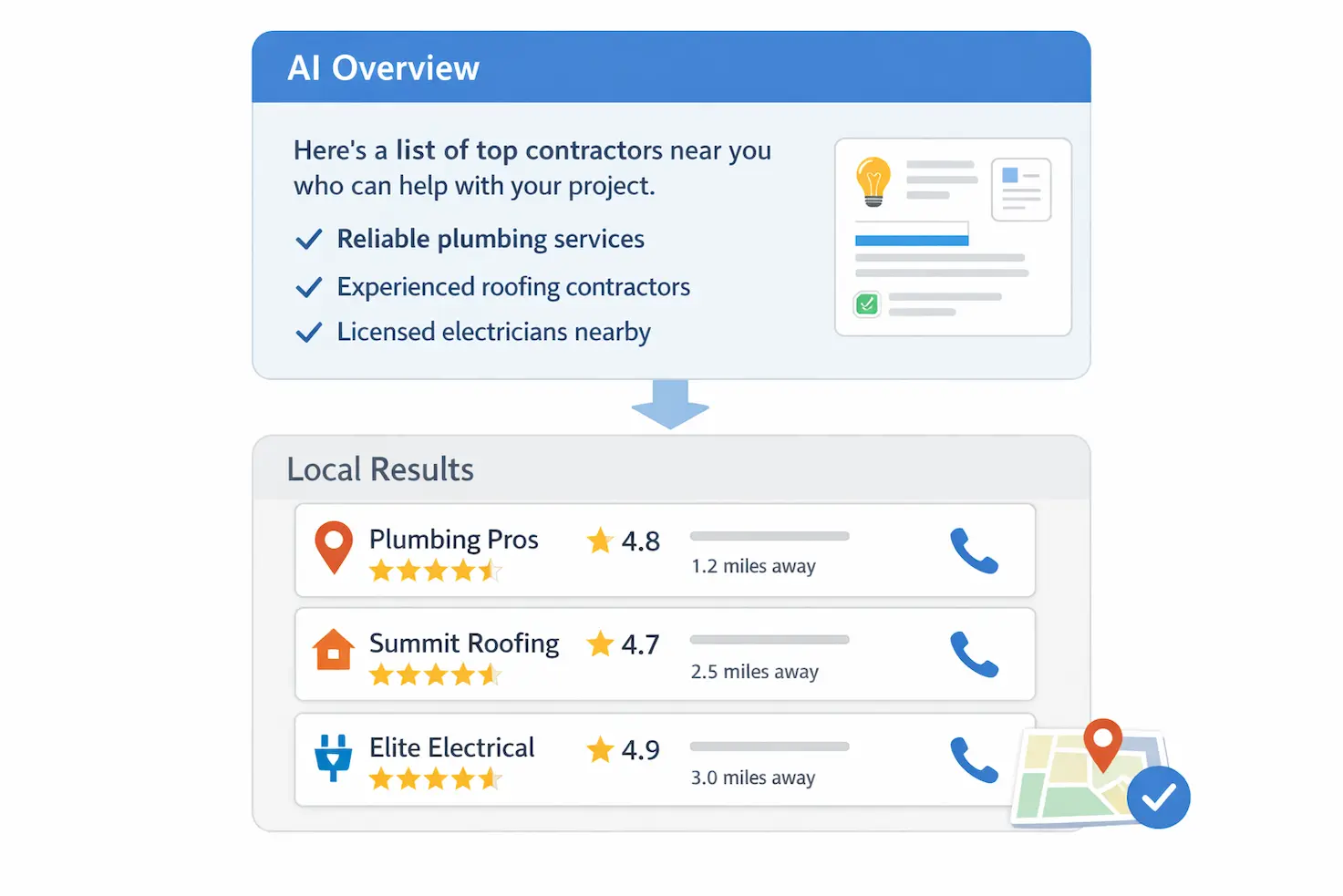
AI Overviews are AI-generated summaries that sometimes appear at the top of Google results. They pull information from multiple sources and try to answer the question immediately, often without requiring a click.
For contractor SEO, that usually means:
- Some informational searches will send fewer clicks to your site
- Homeowners will research less and decide faster
- Reviews, consistent business information, and strong service pages will matter more
So the goal shifts. It is not only “get more traffic.” It becomes “be the contractor search engines can confidently surface and customers feel comfortable contacting.”
How does AI search affect contractor leads?
1) You may lose some blog clicks, but lead quality can improve
AI summaries tend to show up on research-style searches. Those searches still happen, but the click might not.
Examples:
- “How long does a water heater replacement take?”
- “Do I need a permit for an electrical panel upgrade?”
- “Why is my AC blowing warm air?”
When the homeowner moves from research to “I need help,” your visibility and credibility become the deciding factors.
That is why modern contractor marketing focuses on:
- Google Business Profile performance
- Strong service and location pages
- Trust signals that reduce doubt
- Conversion and lead capture so fewer clicks still become booked jobs
2) Service pages need to answer buying questions, not just repeat keywords
A lot of contractor sites still have thin service pages that only say what you do and where you do it.
That used to be enough. It is weaker now.
To compete in AI-influenced search, your service pages should answer the questions customers actually use to decide:
- What does it usually cost and what changes the price
- How long it usually takes and what affects timing
- Repair vs replace guidance when relevant
- What the process looks like after they call
- Proof that you are legitimate (license, insurance, warranties, certifications, years in business)
- A short FAQ based on what customers ask on the phone
These are “money pages” because they rank, convert, and build trust at the same time.
Quick takeaway: if your top service pages do not include pricing variables, timelines, and proof, fix those first.
3) Google Business Profile becomes even more important
For local SEO, your Google Business Profile is often the biggest driver of calls.
AI-driven features and local results pull heavily from:
- Your business listing details
- Your reviews
- Your photos
- Your services
- Your category and service area
A strong profile should include:
- Correct categories
- A detailed service list
- Accurate service areas
- Real job photos
- Q&A that answers common customer questions
- Steady reviews and quick responses
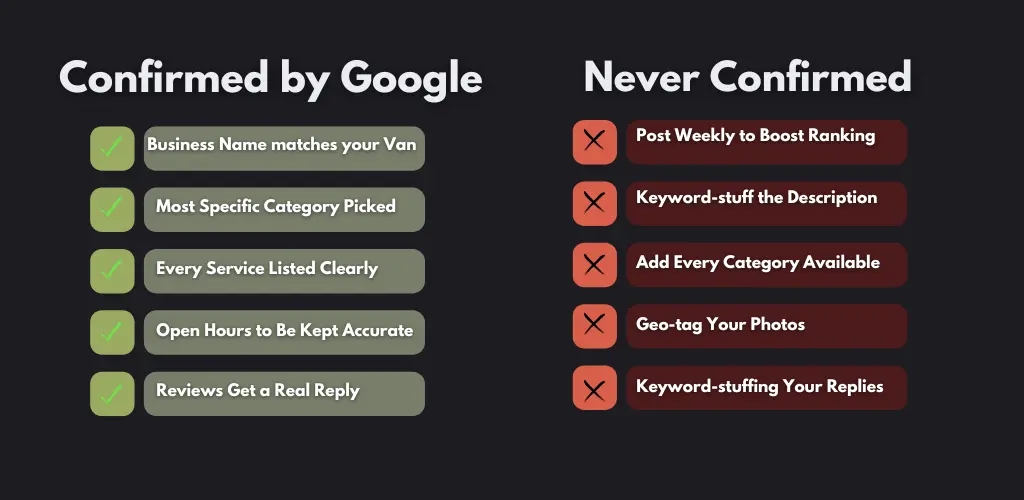
A simple habit that helps: add a couple job photos each week and respond to reviews quickly. Consistency beats occasional big updates.
4) NAP consistency is a competitive advantage most contractors ignore
AI systems do not like uncertainty. If your name, address, or phone number is inconsistent across platforms, it creates doubt. Doubt can lower visibility.
Check and fix:
- mismatched NAP across Google, Yelp, Angi, Facebook, BBB, and major directories
- duplicate listings splitting your reviews
- old phone numbers or old addresses still floating around
- mismatches between your website contact page and your Google profile
Simple takeaway: do a citation cleanup at least once a year, especially if you have moved or changed numbers.
5) Conversion matters more when clicks drop
If AI reduces clicks, every visit and every call becomes more valuable. Missed calls and weak site design hurt more than they used to.
Contractors should treat conversion as part of SEO.
Ask:
- Can someone request an estimate quickly without hunting for buttons?
- Are the calls to action clear and tied to your main services?
- What happens after hours?
- Do you have a system for capturing and following up on leads fast?
This is where AI answering and intake services fit naturally. Not as a gimmick, but as lead protection. If you are missing calls, you are paying for visibility you cannot convert.
Quick takeaway: track your call answer rate for one week. If you miss more than 20 percent of inbound calls, fixing that will usually beat publishing more blog posts.
The contractor SEO checklist for AI search in 2026
Step 1: Build service and location pages that answer real job questions
Start with the services that make you the most money.
Examples:
- water heater replacement in [City]
- roof leak repair in [City]
- HVAC replacement in [City]
- electrical panel upgrade in [City]
- drain cleaning in [City]
- bathroom remodel in [City]
- emergency service in [City]
Each page should cover cost, timeline, process, and proof. Add a short FAQ based on real customer questions.
Step 2: Make reviews a consistent part of your marketing system
Reviews are a major local SEO signal and a huge trust factor.
Aim for steady review volume over time. Encourage customers to mention:
- the service performed
- the city
- the outcome
- the experience with your team
Simple request script:
“Thanks again for choosing us. If you have a minute, a review mentioning the service and your city would really help other homeowners find us.”
Step 3: Treat Google Business Profile like a real marketing asset
- Keep categories and services accurate
- Keep service areas realistic
- Add photos regularly
- Fill the Q&A with real questions (this is phasing out now)
- Respond to reviews (good or bad)
- Update posts at least twice a month if you can
Step 4: Add basic schema so search engines interpret your site correctly
Keep it simple:
- LocalBusiness schema
- Service schema for core services
- FAQ schema where you have Q&A
Schema is not magic, but it reduces confusion and helps search engines understand your business.
Step 5: Track outcomes, not only traffic
In AI search, page views can drop while revenue stays steady.
Track:
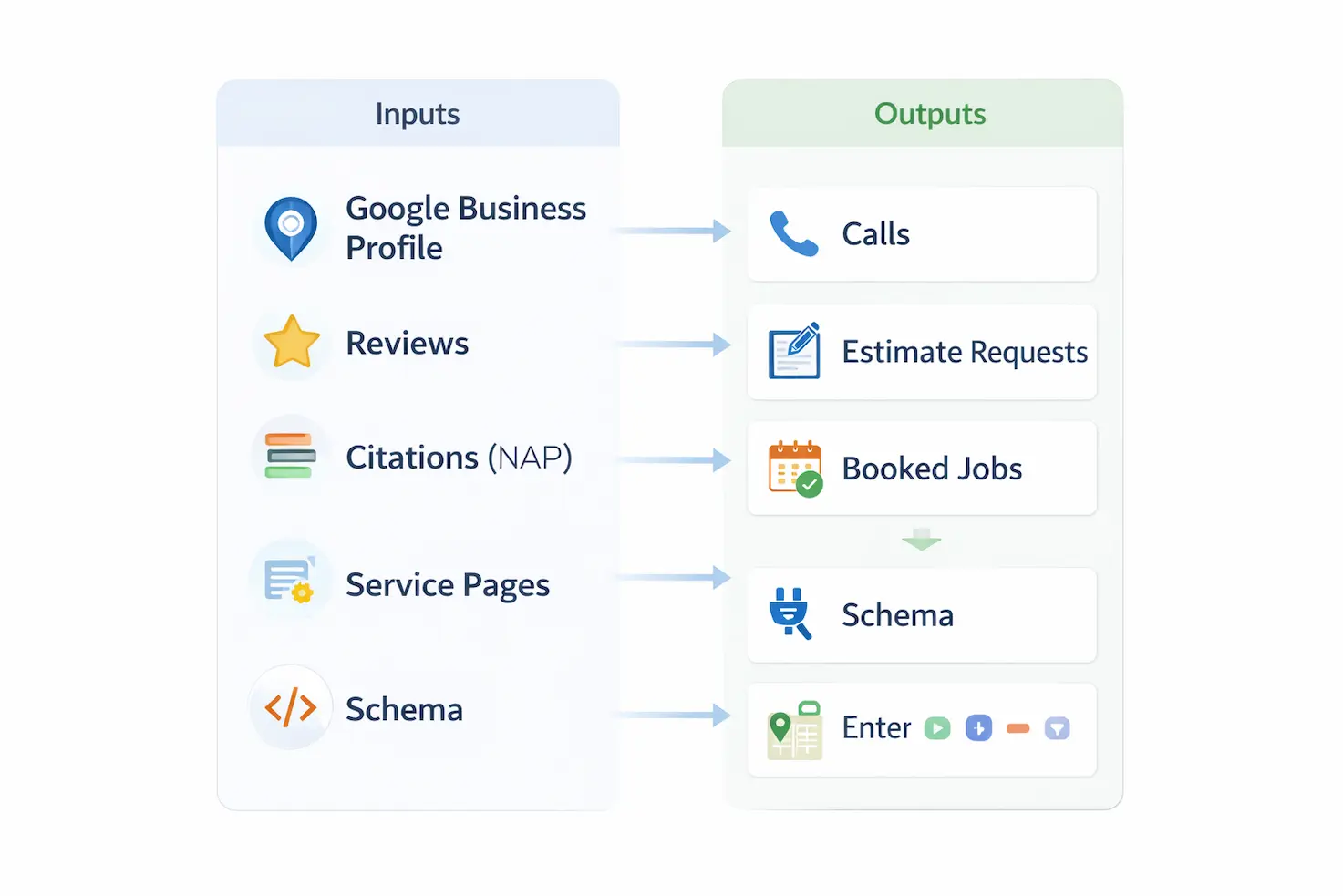
- calls and messages from Google Business Profile
- form fills and estimate requests
- booked jobs and close rate
- lead quality by source
FAQs
How will AI affect the construction industry?
For service contractors, the practical change is that homeowners will get answers faster and compare fewer companies before contacting someone. Contractors who provide clear pricing guidance, realistic timelines, and strong proof signals will be easier to shortlist.
How are contractors using AI?
Most contractors use AI for office-side work, not job site replacement. Things like drafting estimates, organizing job notes, summarizing calls, handling after-hours intake, and speeding up customer communication. If you use AI for content, human editing matters because generic pages do not build trust or convert.
How does artificial intelligence affect contracts and contracting?
AI can help draft and review documents and flag unusual terms, but it can miss context. For bigger projects it should support decision-making, not replace professional review. From a marketing angle, pages that explain your warranties, scope process, and expectations often improve conversions because they reduce buyer uncertainty.
Summary
AI search may reduce clicks for simple informational searches, but it raises the value of strong local SEO, detailed service pages, and trust signals like reviews and consistent business information.
The shortlist is getting shorter and it forms faster.
Contractors who adapt by improving service pages, strengthening Google Business Profile, cleaning up listings, and tightening conversion will not just hold position. They will take visibility from competitors who do nothing.
Practical priorities:
- Build service and location pages that answer cost and timeline questions honestly
- Strengthen Google Business Profile and review quality with consistent effort
- Clean up NAP consistency across directories
- Improve site conversion so fewer clicks still turn into booked work
- Use AI tools to protect leads and support your team, not replace it
Get your free SEO + GBP audit from Bold Peak