
A practical playbook for heating and cooling contractors who want to dominate local search across the Merrimack Valley, the North Shore, and southern New Hampshire, without a location in every city.
TL;DR
Rank in multiple MA/NH towns without an office in each on
BIGGEST LEVER
Your GBP drives 32% of local pack rankings (Whitespark 2026). Optimize it first.
PRIMARY CATEGORY
Rotate seasonally. Furnace Repair Service Oct–Mar, Air Conditioning Repair Service Apr–Sep. “HVAC Contractor” is too generic.
MULTI-TOWN PAGES
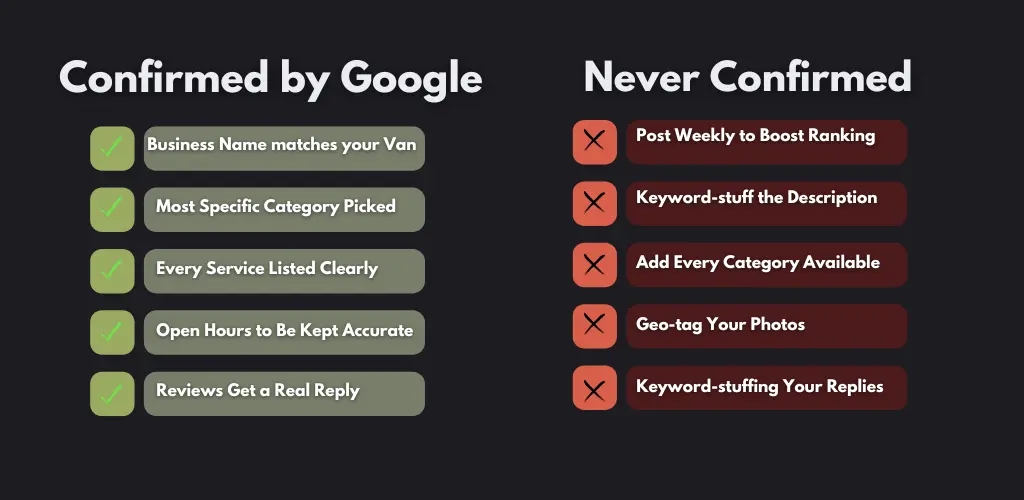
One dedicated page per service per town. “AC repair Lowell MA.” A single service areas page does nothing. Setting service areas in GBP does not affect rankings.
REVIEWS
20% of ranking influence. Ask after every job. Coach customers to mention the town name.
MA LICENSING
No single HVAC license. Display your OPSI Refrigeration Contractor and Sheet Metal Business License numbers on GBP and service pages.
NH LICENSING
Fuel Gas Fitter license required for gas work. Manchester adds a $5,000 surety bond. Show your license number publicly.
STOP DOING THIS
Hiding your address. A visible address is the 7th most influential ranking factor per Whitespark. Hidden addresses measurably hurt rankings.
A homeowner in Lowell wakes up in January to a dead furnace. She picks up her phone and types “furnace repair Lowell MA.” Three map results appear. She calls the first one. That contractor, not the one with the bigger fleet or the older reputation, gets the job.
Google Maps is the new dispatch board for HVAC companies across Greater Boston and southern New Hampshire. Contractors who understand how local search actually works are quietly booking jobs in Nashua, Manchester, Lawrence, and Haverhill without paying for a single lead. Those who do not are watching their phones stay silent.
This guide explains the architecture behind multi-town Google Maps visibility, built specifically for the MA/NH market, including the licensing realities that shape how you legally operate in each state.
How Google Maps rankings actually work for HVAC
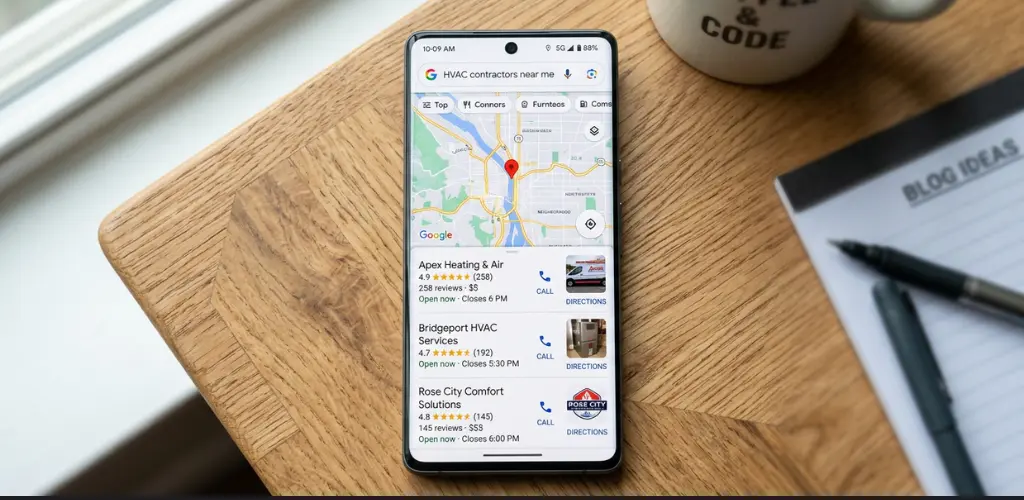
According to Darren Shaw’s Whitespark 2026 Local Search Ranking Factors report, compiled from 47 leading local SEO experts across 187 factors, Google Business Profile signals account for approximately 32% of local pack and Maps ranking influence. Eight of the top ten local pack signals come directly from GBP (Google Business Profile). That makes GBP optimization the single highest-impact activity for any HVAC contractor trying to rank across multiple towns.
Google’s local algorithm evaluates three pillars: relevance (how well your profile and website match the search query), distance (proximity of your verified address to the searcher), and prominence (how well-known and trusted your business appears through reviews, citations, and web authority). Distance cannot be changed, but relevance and prominence can be significantly improved through deliberate strategy.
For the 2026 report, review signals grew from 16% of ranking influence in 2023 to approximately 20% today, with recency and sentiment now outweighing raw review count. GBP basics including primary category selection, proximity, and keywords in the business name all climbed in importance compared to the previous report.
Important finding from Whitespark 2026: A controlled test confirmed that the service areas you define in GBP do not directly influence Maps rankings. Google ranks you based on your verified physical address, not the service area list you set. Distance disadvantages are real, and the answer is building stronger relevance and prominence signals, not just listing more towns in your service area settings.
Why the MA/NH market is uniquely complex and uniquely valuable
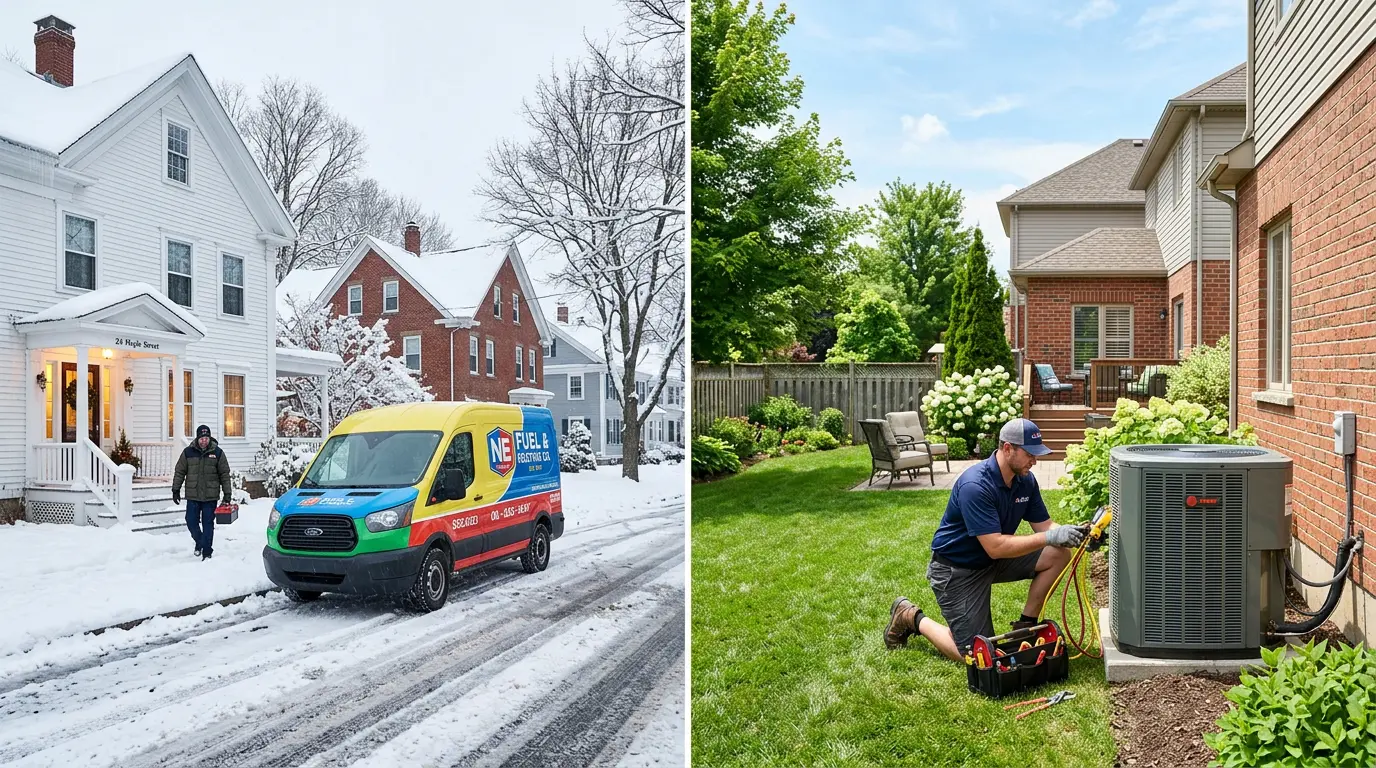
The Greater Merrimack Valley corridor is one of the most HVAC-dense markets in New England. Dense three-deckers in Lawrence and Lowell, aging colonial stock in Andover and Windham, and rapidly expanding suburbs in Derry and Londonderry all generate steady service demand. The market straddles two states with meaningfully different licensing laws, a fact most out-of-market SEO guides ignore entirely.
Why licensing matters for your Google Maps strategy: Your GBP description, website service pages, and ad copy all need to reflect what you are legally permitted to do in each state. Getting this wrong exposes you to complaints with state licensing boards and undermines the professional credibility that drives Google rankings.
Massachusetts: a specialized, multi-board licensing system
Massachusetts does not issue a single unified “HVAC contractor” license. The Division of Professional Licensure distributes authority across three distinct licensing bodies depending on the type of work performed.
Sheet metal work including ductwork fabrication and installation is licensed through the Massachusetts Board of Examiners of Sheet Metal Workers. All business entities performing sheet metal work in the state must be licensed by the Board, and all partners in a partnership or LLP are required to hold current Master Sheet Metal Worker licenses.
Refrigeration work on any system over 10 tons requires a state Refrigeration Contractor license issued through the Office of Public Safety and Inspections. To qualify, a contractor must have completed 2,000 hours of work as a licensed Massachusetts Refrigeration Technician and 100 hours of additional approved refrigeration classroom training. The refrigeration licensing program is administered by the Bureau of Pipefitters, Refrigeration Technicians, and Sprinkler Fitters within the Division of Occupational Licensure. Here are some of the requirements.
Massachusetts also has no reciprocity arrangements with other states, meaning a licensed NH contractor cannot extend operations into MA without going through the Massachusetts licensing process.
New Hampshire: lighter statewide licensing, permit-driven local compliance
There is no statewide general HVAC contractor license requirement in New Hampshire. However, anyone performing fuel gas work must hold a state Fuel Gas Fitter license issued by the Mechanical Safety and Licensing Board within the OPLC. The governing statute is NH RSA 153:27 through 153:35, with administrative rules under Chapter Saf-Mec 100-500.
All HVAC technicians working with refrigerants must hold EPA Section 608 certification under the federal Clean Air Act, regardless of equipment type. At the local level, NH cities rely more heavily on permitting than on licensing. Manchester, Nashua, Concord, and Dover all require contractors to pull permits through their respective building departments for HVAC installations and major repairs. Manchester additionally requires a $5,000 surety bond for contractors operating in the city.
Massachusetts
- No single unified HVAC license
- Sheet Metal Business License required for duct work
- Refrigeration Contractor license (OPSI) for 10+ ton systems
- Local building permits required per municipality
- No reciprocity with NH or other states
- Workers’ comp required for any employees
New Hampshire
- No statewide general HVAC license
- Fuel Gas Fitter license required (NH RSA 153:27-35)
- EPA Section 608 required for refrigerants
- Manchester, Nashua, Concord, Dover: local permits required
- Manchester: $5,000 surety bond required
- Business must register with Secretary of State
Credibility signal for your GBP and website: Displaying your specific credentials, including your Massachusetts OPSI Refrigeration Contractor number, your NH Fuel Gas Fitter license number, and your EPA Section 608 certification, in your GBP description and on your service pages builds trust with homeowners and reinforces professional authority signals that the local ranking algorithm rewards.
The GBP primary category: the most important field you can set
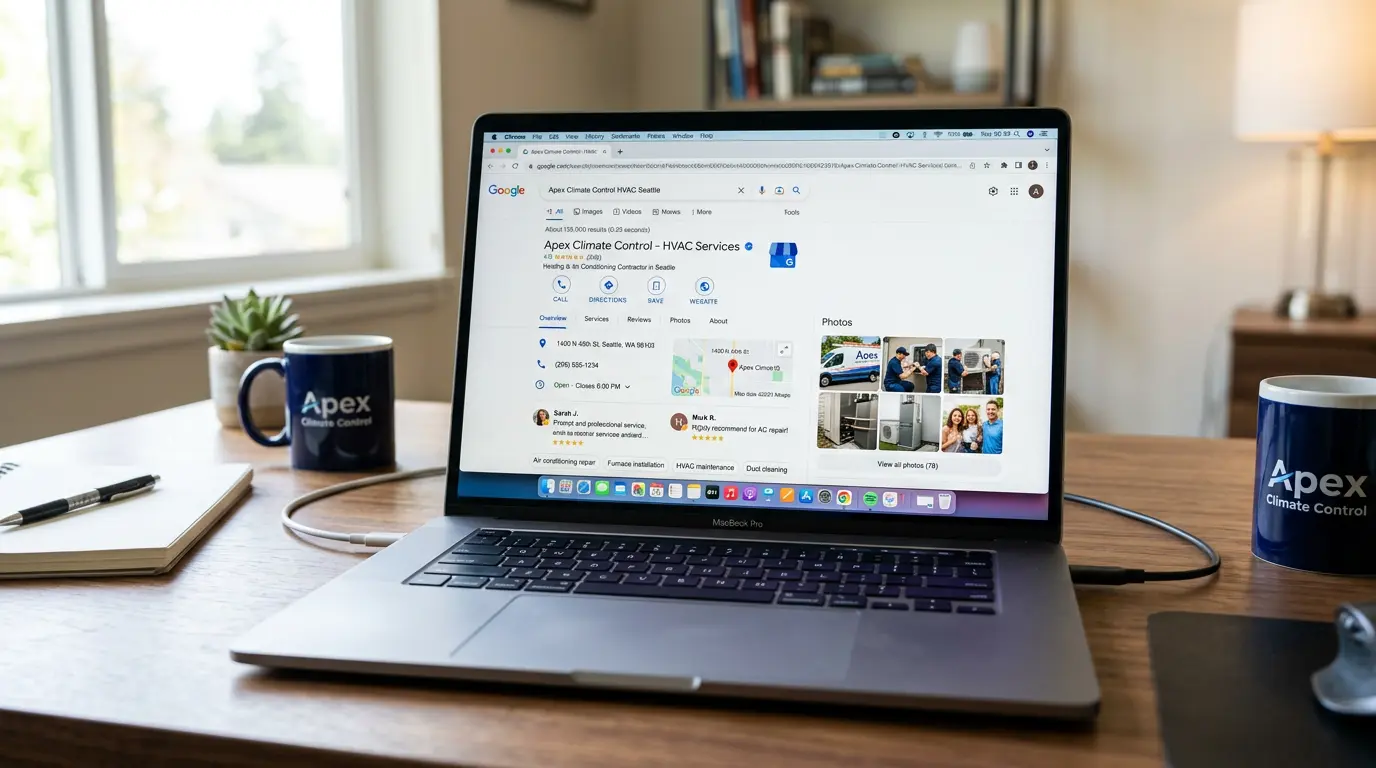
According to Whitespark’s 2026 Local Search Ranking Factors report, the primary category is the single most important field in your entire Google Business Profile. It tells Google what your business fundamentally is, and it directly determines which searches can trigger your listing in the local pack.
For HVAC companies, the conventional advice to simply set “HVAC Contractor” and leave it there is worth scrutinizing. Darren Shaw discussed on a 2025 podcast, and participants in the Local Search Forum confirmed, that the stronger approach for residential heating and cooling companies is to rotate the primary category seasonally to match current consumer demand. The Advice Local writeup of Whitespark’s 2026 report makes the same point explicitly: an HVAC company should consider listing as “Heating Contractor” during winter and “Air Conditioning Repair Service” during summer.
After looking at HVAC businesses Google Business Profile in my local area, I have found that the majority of these companies use “HVAC Contractor” as their primary category. My recommendation, based on studying top-ranking profiles locally and around New England, is to adjust seasonally toward the more specific repair-oriented categories: “Heating Contractor” or “Furnace Repair Service” in cold months, “Air Conditioning Repair Service” in warm months.
For the New England climate, this seasonal rotation is especially valuable. A contractor whose primary category reads “Furnace Repair Service” during a January cold snap is more precisely aligned with the queries that matter most during that window than a competitor stuck on the generic “HVAC Contractor” label.
October through March (heating season)
Primary: Furnace Repair Service
- Heating Contractor (secondary)
- Air Conditioning Contractor (secondary)
- Air Conditioning Repair Service (secondary)
- Mechanical Contractor (secondary)
April through September (cooling season)
Primary: Air Conditioning Repair Service
- Furnace Repair Service (secondary)
- Heating Contractor (secondary)
- Air Conditioning Contractor (secondary)
- Mechanical Contractor (secondary)
Category strategy note from the Local Search Forum: While “HVAC Contractor” is not wrong and will not hurt you, the consensus is that more specific subcategories, particularly the repair-oriented ones like “Furnace Repair Service,” better match the actual queries homeowners type during moments of urgency. Your primary category is where the strongest relevance signal lives.
The service plus location page architecture
The most important structural decision on your website is how to pair services with locations. A single “Service Areas” page is not sufficient. Google needs a dedicated URL for each market you want to rank in, with unique, locally relevant content on each page. Google’s own Business Profile guidelines require that multi-location and service-area businesses link to dedicated location-specific pages rather than a generic homepage.
| Target keyword | State | Seasonal peak | Intent signal |
|---|---|---|---|
| AC repair Lowell MA | MA | Jun–Aug | Emergency / same-day |
| Furnace repair Nashua NH | NH | Oct–Feb | Repair / diagnostic |
| Emergency HVAC Manchester NH | NH | Year-round peaks | High urgency, high conversion |
| Central AC installation Lawrence MA | MA | Mar–May (pre-season) | Planned replacement |
| Heat pump repair Haverhill MA | MA | Oct–Nov | Transition-season demand |
| HVAC maintenance Derry NH | NH | Aug–Sep, Mar–Apr | Long-term / high LTV |
| Boiler repair Andover MA | MA | Nov–Mar | Repair / emergency |
| Mini split installation Salem NH | NH | Apr–Jun | New install / upgrade |
Each keyword deserves its own landing page with unique content: local climate context, your state-specific licensing credentials, permit language for that municipality, and real service history in the area if possible. Pages targeting NH towns should reference your Fuel Gas Fitter license number and familiarity with local permit processes. Pages targeting MA towns should reference your OPSI Refrigeration Contractor number and, where relevant, your Sheet Metal Business License.
The MA-specific search angle most guides miss: Massachusetts’s MassSave program drives a notable spike in heat pump installation inquiries in late winter and early spring. HVAC contractors certified to work with MassSave rebates have access to a search angle that is entirely Massachusetts-specific and that no national competitor can authentically replicate.
The full GBP optimization checklist
Given that GBP signals represent the largest single ranking category in Whitespark’s 2026 report, every field and feature deserves deliberate attention.
NAP consistency
Your Name, Address, and Phone number must be identical across your GBP, your website footer, Yelp, the Better Business Bureau, HomeAdvisor, your local Chamber of Commerce listing, and every other directory. Even minor formatting differences send conflicting signals to Google. Darren Shaw has noted that consistent citations remain one of the strongest signals for proximity-based local results.
Visible business address
Whitespark’s 2026 report found that having a visible address is the 7th most influential factor on local pack rankings. Service area businesses that hide their address per Google’s guidelines suffer a measurable ranking penalty in practice. If your business operates from a physical office or shop, display that address.
Reviews: now the second-largest ranking category
Review signals grew from 16% to approximately 20% of local ranking influence between 2023 and 2026, per Whitespark’s data. A steady, consistent flow of new reviews outperforms a burst followed by silence. Train technicians to mention specific town names when wrapping up a job. Customers who reference “Nashua” or “Methuen” in their reviews give your profile geo-relevance signals that no paid tool can replicate.
Posts, photos, and job check-ins
GBP Posts are underused by most contractors and over-rewarded by the algorithm. Post seasonal offers, completed job photos, and reminders tied to MA/NH seasonal events. Job check-ins, photos posted at the time of service and tagged to the service address town, add authentic location-specific signals to your profile that competitors cannot manufacture at scale.
- Primary category: rotate seasonally between “Furnace Repair Service” (Oct–Mar) and “Air Conditioning Repair Service” (Apr–Sep)
- Secondary categories: Heating Contractor, Air Conditioning Contractor, Mechanical Contractor, the inactive season’s primary repair category
- Business address visible on profile (do not hide it)
- NAP matches website, Yelp, BBB, HomeAdvisor exactly
- License numbers (MA OPSI / NH OPLC Fuel Gas Fitter / EPA 608) in GBP description
- GBP website link points to town-specific landing pages, not the generic homepage
- Weekly posts: seasonal offers, completed jobs, local references
- Job check-ins with location-tagged photos for each town served
- Steady review cadence, not sporadic bursts; respond to every review
Citations and local authority
Citation signals have declined in relative weight compared to GBP and reviews in recent years, but consistency still matters. For the MA/NH HVAC market, the highest-value citation sources include the Better Business Bureau (separate MA and NH chapters), the Greater Nashua Chamber of Commerce, the Greater Manchester Chamber of Commerce, the Merrimack Valley Chamber of Commerce, HomeAdvisor, Angi, Yelp, and the ACCA contractor directory.
Local citations from NH-specific directories, particularly those tied to the Nashua and Manchester business communities, provide geographic authority that generic national directories cannot match. Bold Peak through our Local SEO Service, will help you identify high-value, industry-specific and geography-specific citation opportunities that competitors may have and you do not.
What separates MA/NH contractors from national competition
National HVAC brands and lead-aggregator platforms compete in every market simultaneously, but they cannot authentically represent your state-specific licensing credentials, your local permit experience, or your verified service record in specific New Hampshire municipalities. A GBP profile that references your NH Fuel Gas Fitter license number under RSA 153, your experience pulling permits through Nashua’s Community Development Building Safety Department, and real job photos from specific Lowell neighborhoods is something a national platform structurally cannot replicate.
The contractors who dominate multi-town Google Maps results in this region are not necessarily the largest or best-funded. They are the ones who treat local SEO as an ongoing practice: monitoring rankings, updating categories seasonally, posting consistently, and earning reviews at a steady pace. The 2026 Whitespark data confirms that Google is increasingly rewarding engagement, recency, and customer experience signals over static one-time optimizations.
To learn more about how to get your HVAC business to the next level, give us a call or contact us. And if you want to understand the broader local SEO picture beyond just Maps ranking, check out my local SEO guide.
Use our free Service Area SEO Gap Calculator to see exactly where your website has gaps.
Sources
Darren Shaw, Whitespark. Local Search Ranking Factors 2026. whitespark.ca/local-search-ranking-factors
GmbApi. Local Search in 2026 vs 2023: What Actually Matters Now. gmbapi.com/news/local-ranking-factors-comparison-2026-2023
Massachusetts Office of Public Safety and Inspections (OPSI) Licensing Overview. mass.gov/office-of-public-safety-and-inspections-opsi-licensing
Massachusetts Board of Examiners of Sheet Metal Workers, Sheet Metal Business License Application. mass.gov/how-to/sheet-metal-business-license-application
Massachusetts OPSI, Apply for a Refrigeration Contractor License. mass.gov/how-to/apply-for-a-refrigeration-contractor-license
Massachusetts Bureau of Pipefitters, Refrigeration Technicians, and Sprinkler Fitters, Apprentice Licensure FAQ. mass.gov/info-details/refrigerationpipefitter…
New Hampshire OPLC, Mechanical Safety and Licensing Board. oplc.nh.gov/mechanical-safety-and-licensing-board
NH Employment Security, Fuel Gas Fitter Licensing Summary (NH RSA 153:27-35 / Saf-Mec 100-500). nhes.nh.gov/elmi/…/gasfittr.pdf
Local Search Forum (with Darren Shaw input). Seasonal HVAC GBP Category Changes and Optimization. localsearchforum.com/threads/more-clarification-on-seasonal-hvac…
Licensing information reflects requirements as of April 2026. Contractors should verify current requirements directly with the Massachusetts Division of Professional Licensure (mass.gov/dpl) and the New Hampshire Office of Professional Licensure and Certification (oplc.nh.gov) before operating in either state.