
What Is Local SEO and How It Works (In Plain English)
Local SEO is the process of optimizing your online presence so your business appears in location-based search results, especially on Google Search and Maps. It works by using proximity, relevance, and trust signals like Google Business Profiles, reviews, and local keywords to connect nearby searchers with your business.
Why Local SEO Matters (Direct Impact on Visibility)
Local SEO directly affects whether your business appears when customers search nearby.
According to Google, 46% of all searches have local intent, and Google processes over 6.3 million searches per minute. When users search terms like “pizza near me” or “dentist in Chicago,” Google prioritizes businesses with strong local signals.
Local SEO Improves:
- Visibility in Google’s local pack and Maps
- Click-through rates from search results
- In-store visits and phone calls
Businesses that appear in the top local results receive the majority of engagement, while those below often receive little to none.
What Is Local SEO?
Local SEO is the practice of optimizing on-site and off-site signals so Google understands where your business is located, what it offers, and whether it is trustworthy.
It focuses on three core ranking factors:
- Relevance – How closely your business matches the search
- Distance – How close you are to the searcher
- Prominence – How established and trusted your business appears online
This is why two businesses with similar services can rank very differently in the same city.
Local SEO vs. Traditional SEO (Direct Comparison)
Local SEO and traditional SEO serve different search intents.
Local SEO
- Targets location-based queries
- Drives calls, directions, and visits
- Example: “pizza restaurant in Seattle”
Traditional SEO
- Targets informational or national searches
- Drives content traffic
- Example: “how to make pizza dough”
For businesses relying on nearby customers, Local SEO has a more direct impact on revenue.
How Google Decides Which Local Businesses to Show
Google uses multiple local signals to determine rankings.
Google Business Profile
Your Google Business Profile is one of the strongest Local SEO ranking factors. Optimized profiles are significantly more likely to appear in map results and the local 3-pack.
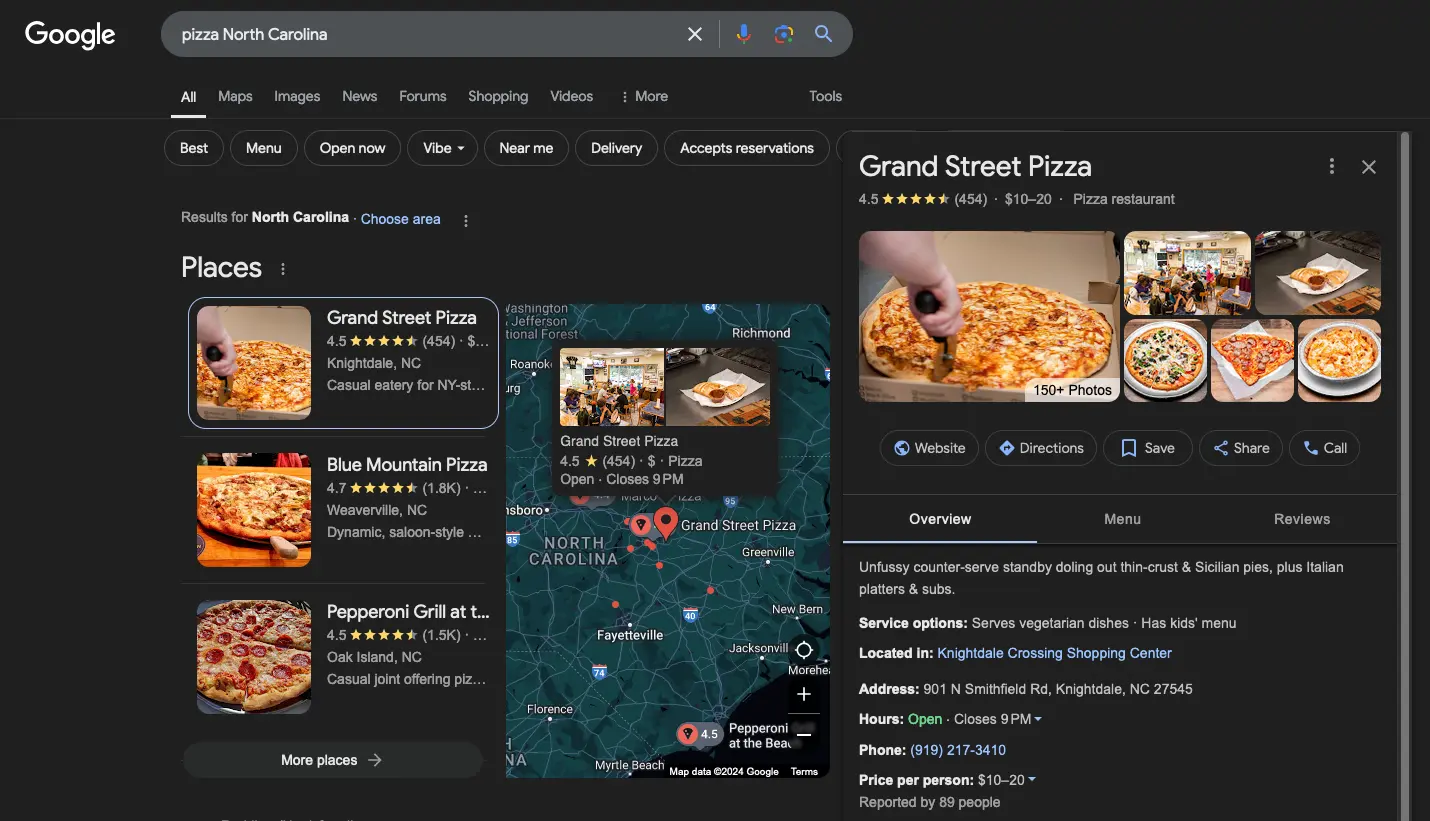
Google Business Profile displayed for users when doing a local search
Optimized profiles increase:
- Profile views
- Website clicks
- Direction requests
- Phone calls
Consistent Business Information (NAP)
Google cross-checks your:
- Name
- Address
- Phone number
- Hours
Consistency across your website, Google Business Profile, and directories improves trust. Inconsistent data reduces ranking confidence and can suppress visibility.
Reviews and Reputation Signals
Reviews influence both rankings and conversions.
Data shows:
- 4 out of 5 consumers use search engines to find local information
- 50% of mobile local searches result in a store visit within 24 hours
Responding to reviews signals engagement and credibility to both users and search engines.
Quantitative Example: “Pizza Near Me” Search Interest
Search behavior clearly shows how Local SEO works in practice.

Interest over the last 12 months about Pizza near me
Over the past 12 months, searches for “pizza near me” remain consistently high, with predictable spikes during evenings and weekends. This demonstrates:
- Strong purchase intent
- Immediate local demand
- Why proximity-based optimization matters
Businesses optimized for these queries capture demand at the moment users are ready to act.
Signs Your Website Needs Local SEO Services
Your site likely needs Local SEO improvements if:
- Visibility Indicators
- You don’t appear for location-based keywords
- Competitors rank above you locally
- Your business is missing from Google Maps
- Traffic and Conversion Indicators
- Local traffic is low
- Few calls or direction requests
- Poor conversion rates from nearby users
- Structural and Technical Indicators
- No local keywords on pages
- Missing local business schema
- Poor mobile performance
- Slow page load speeds
Each of these issues directly limits how effectively Google can match your business to local searches.
What a Good Local SEO Strategy Looks Like
1. Google Business Profile Optimization
- Correct primary category
- Accurate business details
- High-quality photos
- Consistent posting and updates
- Ongoing review management
2. Local Keyword Research
Local SEO depends on understanding how customers actually search.

Pizza Style Trends over a year
For example, pizza customers may search:
- “New York style pizza”
- “gluten-free pizza”
- “pizza delivery near me”
Targeting these variations improves relevance and expands visibility.
3. Website and On-Page Optimization
Local SEO works best when listings and websites support each other.
Key Factors:
- Mobile responsiveness
- Clear contact details
- Location-specific pages
- Optimized titles and descriptions
- Local content and backlinks
Local Authority and Community Signals
- Local directories
- Community partnerships
- Events and sponsorships
- Local media mentions
These signals strengthen prominence, one of Google’s core local ranking factors.
The Bottom Line
Local SEO works by aligning your business with how Google evaluates local relevance, distance, and trust. It directly impacts whether nearby customers find you at the moment they’re ready to act.
Businesses that invest in consistent, data-driven Local SEO gain visibility, traffic, and real-world visits. Those that don’t often remain invisible, regardless of service quality.
If increasing local visibility is a priority, Local SEO is not optional. It is foundational.
Next step: Evaluate your current local presence and identify gaps. A focused Local SEO strategy can quickly reveal where growth opportunities exist. Reach out for a free consultation and see where your business stands today.